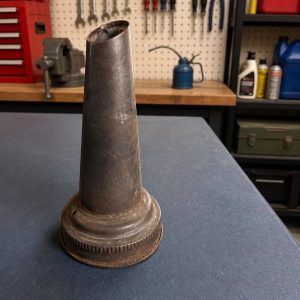
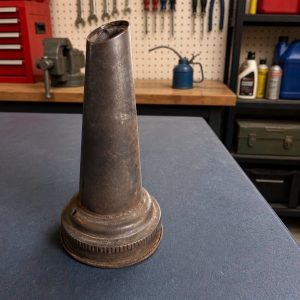
The object’s substantial circular base may have played an important role in its original operation. Its ridged exterior could have helped someone tighten, loosen, or remove the component when necessary. Alternatively, the texture might have formed part of a connection mechanism designed to attach it securely to another piece of equipment. Examining the underside could reveal even more clues.
Internal threads, mounting holes, grooves, or other attachment features would help establish how the object was originally installed. Such details could distinguish a removable mechanical fitting from a freestanding funnel or pouring device. Although its appearance suggests a specialized component, its exact function remains uncertain.
The dark brown, gray, and black surface suggests that it might be made from iron or steel, although appearance alone cannot confirm its composition. Decades of exposure to moisture, air, dirt, and repeated handling can cause discoloration and corrosion. Scratches, dents, and smoother areas might also reveal where the object was handled or connected to other surfaces. Before plastic fittings became widespread, manufacturers commonly used durable metals for funnels, connectors, and mechanical attachments.
One possible explanation is that the object originated on a farm. Agricultural equipment frequently required specialized metal components for transferring grain, animal feed, water, fuel, and lubricants. Its tapered tube might have directed materials into containers or machinery, while its circular base could have secured it in place. However, similar fittings were also used in factories and workshops. Discovering whether it came from an old barn, machinery shed, or industrial collection could provide valuable clues about its history and original purpose.



This Post Has One Comment