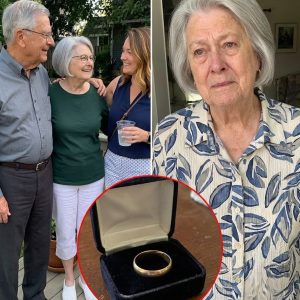
I drove three hours in a thrift-store dress, carrying a small velvet box and the hope of seeing my son married, only to arrive at an abandoned building that had clearly been chosen to send me away. There were no guests, no music, only silence that made it clear I had been guided there on purpose. I sat in my car rereading the address he sent, slowly realizing this was not a mistake but a decision. In that moment, a painful truth settled in: my own son was ashamed of me and the life I had given him, even though I had built it through years of sacrifice and hard work.
Weeks earlier, he had called excitedly to say he was marrying Chloe, a woman from a wealthy family. I was happy for him, proud that he had risen above our struggles. I raised him alone after his father died, working long shifts and never complaining, believing every sacrifice was for his future. But slowly, his tone changed. He spoke carefully about the wedding being “formal,” hinting that I might feel out of place. I ignored it at first, but I later understood he was preparing me for exclusion.
I refused to turn back. I found the real venue online—a luxury hotel—and drove there, but my car broke down in the rain. With no other choice, I walked through the storm until I reached the glowing entrance. Inside, everything went silent when I appeared. My son froze when he saw me, his polished world suddenly exposed. I placed the velvet box on his plate, revealing a ring I had saved years to buy after he once admired it in a store window. The truth unraveled in front of everyone, including his bride, as my presence shattered the story he had told about me.
Later, in the rain, he admitted he had hidden me out of shame. I didn’t yell or break—I simply understood. Because love doesn’t disappear when it is rejected; it only changes shape, learning how to carry both pain and devotion at the same time.