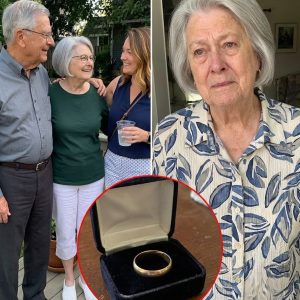
I drove three hours in my best thrift-store dress to watch my son get married, carrying a small velvet box and a heart full of hope, only to arrive at a deserted, crumbling building on the edge of town. There were no guests, no music, no signs of celebration—just silence and peeling paint. I sat in my car gripping the steering wheel, rereading the address Mark had sent, slowly realizing this was not a mistake but something intentional. That realization hurt more than anger ever could, because it suggested I had been excluded on purpose.
Three weeks earlier, Mark had called me full of excitement about his engagement to Chloe, whose family carried wealth and influence. I remember crying with pride in my tiny kitchen, thinking of every sacrifice I had made while raising him alone after his father’s death. I worked double shifts at a grocery store and diner, exhausted most days but always focused on giving him a better life. Every hardship felt meaningful because it was building his future.
As the wedding details emerged, however, I began to notice a shift in his voice. He spoke carefully about the event being “formal,” suggesting I might feel uncomfortable, using words that sounded polite but carried distance underneath them. I tried to ignore it at first, convincing myself he was just nervous or busy. But slowly I understood those comments were not caution—they were preparation for my absence.
Sitting outside the empty venue, I finally accepted the truth I had avoided: my son was not just moving forward in life without me, he was trying to rewrite his past so I no longer fit inside it.