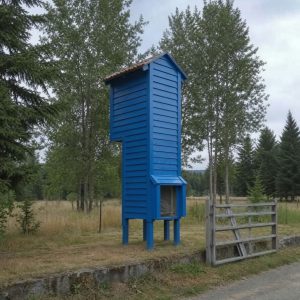
Attics have a way of turning the familiar into something unsettling. Low light, dust, and years of neglect can distort ordinary objects into shapes that feel almost unrecognizable. When you come across something unusual tucked into the rafters or buried under storage, it’s easy for your imagination to fill in the gaps. But in most cases, these so-called mysteries become much less dramatic once you take a closer, more deliberate look.
A good first step is to pause and observe rather than react. Objects that seem strange at a glance often reveal small, recognizable details when viewed up close—materials, textures, or patterns that hint at their original purpose. Something that looks confusing or even alarming from a distance may turn out to be a familiar household item altered by time, wear, or storage conditions.
In many cases, what appears unusual is simply the result of aging and environment. Items like decorations, furniture parts, or stored equipment can warp, fade, or collect dust and debris over the years. For example, an old artificial Christmas tree can lose its shape, with bent branches, tangled wires, and insulation clinging to the frame, making it look nothing like it once did. Without context, it’s easy to misinterpret something that has simply changed over time.
The key is to approach these discoveries with curiosity instead of assumption. Take a moment to examine the object from different angles, look for familiar components, and consider how storage conditions may have altered its appearance. More often than not, what seems mysterious is just a forgotten item with an ordinary explanation—reminding us that even the strangest finds usually have simple, logical origins.