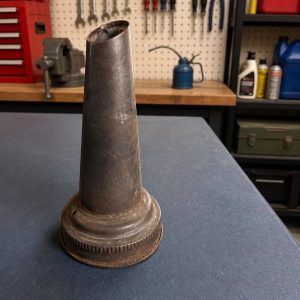
One noticeable feature is the long metal tube extending upward from the circular base. It gradually narrows toward one end and appears to have an angled opening. This design is commonly associated with equipment used to guide or control the movement of materials. Depending on its original purpose, it might have transferred liquids, oil, fuel, grain, or powders.
The tapered shape could have helped concentrate the flow through a smaller opening, allowing more controlled delivery. However, similar designs appear in many mechanical components. What looks like a simple funnel might actually be a nozzle, connector, or removable attachment belonging to specialized equipment.
Its dimensions could provide important clues. A small component might have belonged to a household or workshop tool, while a larger version could have been associated with agricultural machinery or industrial equipment. Examining the tube’s interior would also help determine whether materials were intended to pass through it.
Another interesting feature is the wide circular base, which appears thicker than an ordinary funnel. Its ridged outer edge might have provided additional grip or helped secure the component to another piece of equipment. These details suggest that it may have served a specialized mechanical purpose rather than being an ordinary pouring utensil.
THE STORY CONTINUES ON THE NEXT PAGE… 👇👇👇



This Post Has One Comment