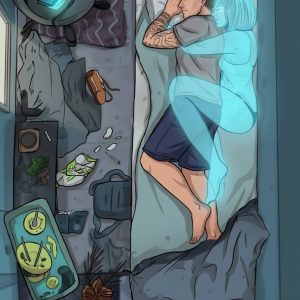
Behind the quiet gates of his estate, Rajesh believed he had finally settled his life. Wealth had given him distance, and distance made it easier not to revisit the past. But an unexpected invitation to an art gallery disrupted that illusion. There, instead of admiration, he found Arjun—the boy he had once rejected after Meera’s death. Calm, composed, and carrying a quiet truth, Arjun stood before him not with anger, but with something far heavier.
The gallery revealed more than art. Each painting told a story lived, not imagined. When Arjun showed him a piece titled Mother, Rajesh felt his certainty crumble. Meera was captured in her final moments, holding onto a love Rajesh had abandoned. Then came the truth—simple, undeniable. Meera had never betrayed him. Her silence had come from fear, not deception. Arjun was his son. What Rajesh had rejected was not doubt, but his own inability to face grief.
In the weeks that followed, Rajesh returned quietly, attending exhibitions without announcing himself. He learned to be present without expectation. When they finally spoke, Arjun did not offer forgiveness, but he did not shut the door either. He acknowledged the absence that had shaped his life, choosing not to carry bitterness forward.
Rajesh understood then—some losses cannot be undone. He could not reclaim the past, only respond differently now. And in that quiet acceptance, he faced a truth that would never shift again.