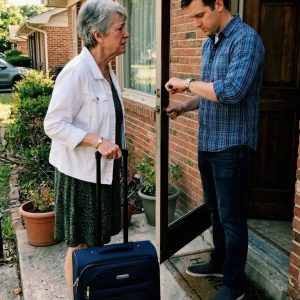
The front door of my childhood home groaned like it remembered me. Ten years had passed since I’d been banished—ten years since I was told never to return. Yet the foyer still smelled the same: lemon wax, expensive leather, and that cold metallic scent of prestige. My parents stood under the chandelier, silent and pale, staring at my son, Leo, like he was a ghost made real.
My father finally rasped, “He looks… familiar.” I didn’t sit. I kept my denim jacket on like armor. “He should,” I said. “Because you know his father. You toasted with him, called him a brother.” My mother clutched her pearls, stunned. They had spent a decade believing Leo’s father was a stranger—because I’d never named him.
“Do you remember Robert Keller?” The name drained the color from my father’s face. His eyes snapped to Leo’s, and recognition landed like a blow. He whispered that I was lying, but his voice had no strength. I set a manila folder on the coffee table: DNA results, investigator statements, and a sealed court file. I told them the truth I’d been too terrified to say at eighteen—that Robert, my father’s partner and “friend,” had preyed on me and threatened to ruin my life if I spoke up.
The room filled with shame. My father admitted what he’d done: he threw me out, protected his reputation, and kept Robert close while I struggled to raise Leo alone. I told them I wasn’t there for money or late apologies. I wanted them to meet their grandson—and finally understand what their silence cost. We left, the house shrinking behind us like a tomb.
Months later, letters came. Calls. Slow, careful visits in a neutral park. Then my father met me at a diner and slid over an obituary: Robert Keller was dead. I felt no triumph—only a quiet emptiness. My father said belief mattered more than death, and I agreed. Years later, Leo asked if I’d do it all again, knowing I’d be cast out. I didn’t hesitate: yes—because every hard moment led me to him. And in that truth, the Thorne legacy finally lost its power.