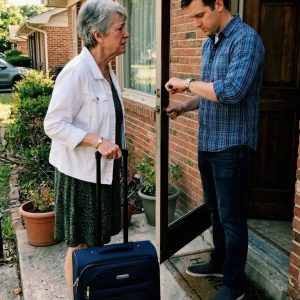
Lucia Hernandez had just undergone a cesarean section when her world shifted—not from childbirth, but from what came after. Weak, in pain, and holding her newborn daughter, Valeria, she was staying at her parents’ apartment with her husband Mateo while their home was being repaired. It should have been a time of care. Instead, it became a turning point.
While Mateo stepped out for medication, Lucia’s mother told her to pack up. The room was needed for her younger sister, Daniela, and her baby. It wasn’t a conversation—it was already decided. Her father stood firm beside her mother, leaving no space for discussion.
Struggling to move after surgery, Lucia gathered her things in disbelief. By the time Daniela arrived, smiling with relief, Lucia realized she no longer had a place there.
When Mateo returned and saw her outside with their bags, he didn’t argue. He simply understood. He took her straight to the hospital, where doctors treated the physical strain caused by the ordeal.
In the days that followed, Lucia and Mateo faced a difficult truth: their family relationship had crossed a line. For years, they had financially supported her parents’ home. Now they saw how support without boundaries had become unhealthy.
They stepped back, clarified responsibilities legally, and focused on their own stability. Months later, they moved into a new home—one built on respect and shared decisions.
Lucia learned something lasting: protecting your family sometimes means redefining where you belong.