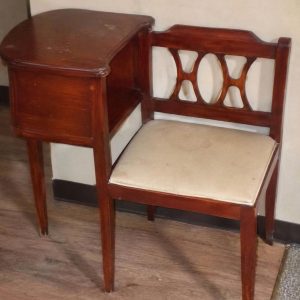
Once I discovered its original purpose, the unusual proportions of the furniture suddenly made perfect sense. The raised tabletop wasn’t simply decorative, and the small compartment wasn’t an unnecessary addition. Both features were carefully designed to make everyday telephone conversations more convenient. The chair allowed someone to sit comfortably while keeping the telephone, writing materials, and important contact information within easy reach. It was a practical solution for a time when communication required a little more preparation than it does today.
Imagine a household several decades ago. Someone might sit in this chair, open a telephone directory, search for a friend’s number, and carefully dial it. During the conversation, they could write down an address, record an appointment, or leave a message for another family member. Unlike today’s quick phone calls, conversations often became lengthy social occasions. This specialized furniture made those moments more comfortable and enjoyable.
Telephone chairs also reflected the interior design preferences of their time. Many featured beautifully finished wooden frames, decorative backrests, upholstered seats, and carefully arranged storage spaces. Their appearance varied depending on the manufacturer and period, but their purpose remained remarkably similar. Today, antique collectors and vintage furniture enthusiasts appreciate these pieces for their craftsmanship, distinctive appearance, and connection to everyday domestic history.
What once seemed like an ordinary chair with an unusual attachment turned out to be a fascinating reminder of how much household life has changed. Modern smartphones have made telephone tables almost unnecessary, yet their charm remains. These vintage pieces tell a story about a slower time when calling someone involved finding a quiet place, looking up a number, and settling in for a conversation. Sometimes, the most ordinary objects from the past have the most interesting stories to tell.

This Post Has One Comment