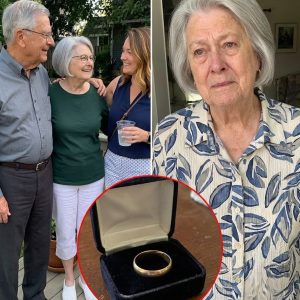
I married Evie because I needed shelter, security, and a future I thought her house could give me, and for a long time I convinced myself that survival was something cleaner than what it actually was.
At twenty-five, I had very little left that felt stable or even remotely mine. Debt collectors treated my phone like it belonged to them, not me, and I had started measuring time by how many nights I could sleep in my truck behind a grocery store before someone finally asked me to leave. Evie, on the other hand, lived in a quiet house that always smelled faintly of lavender and old wood polish, where the refrigerator hummed like it was part of the structure rather than just an appliance.
She was seventy-one, widowed, and gentle in a way that made people lower their voices when they spoke to her, as if the world had collectively agreed that she deserved softness. When she asked me to marry her, I said yes immediately, not because I understood love or even believed in it anymore, but because I was exhausted from being cold, exhausted from pretending I was fine, and exhausted from pretending I had options I didn’t actually possess. I told myself I was stepping into a marriage, but deep down I knew I was stepping into safety disguised as opportunity, and I avoided looking too closely at that truth because it made me uncomfortable in a way I couldn’t afford to feel.
The people around me saw it before I ever admitted it to myself, even if they didn’t say it directly. Jesse, an old coworker who could turn cruelty into humor depending on how many drinks he had, was the first to react when I told him I was getting married. We were sitting at a bar under dim lights that made everyone look slightly more honest than they really were, and when I said her name, he almost laughed before catching himself. He called her “the old widow with the blue house,” like the house mattered more than the person inside it, and…