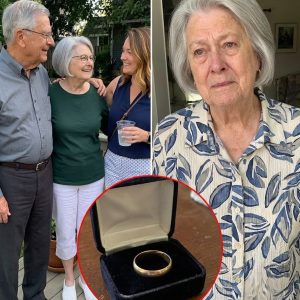
The garage door revealed more than a room—it revealed a quiet, enduring language of love. For fifty years, Henry had kept it closed, filling it with paintings of the same woman, captured across time. At first glance, the secrecy felt like betrayal. But as the images unfolded, layer by layer, it became clear this was not deception—it was devotion expressed in silence.
It’s natural to fear what we don’t understand. Hidden things often invite suspicion before truth has a chance to emerge. Yet standing among those paintings, it became impossible to ignore the depth of what Henry had created. He wasn’t hiding a second life—he was preserving a feeling, holding onto something he couldn’t risk losing to time.
When he finally shared the truth, it came not as justification, but as vulnerability. The years of silence transformed into something meaningful. What once seemed distant began to feel deeply sincere. His art wasn’t about beauty alone—it was about witnessing, about quietly saying that love had never faded, not even for a moment.
In the end, the locked garage became a shared space, not of secrecy but of understanding. Love, it turned out, isn’t always loud or obvious. Sometimes it grows quietly, through consistency and care, waiting for the right moment to be seen—and finally, understood.