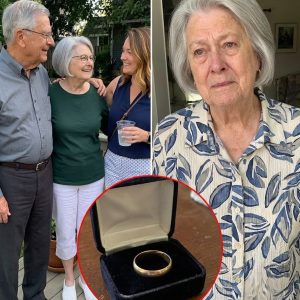
Seven psychological reasons explain why some children emotionally distance themselves from their mothers, revealing patterns rooted in identity formation, safety, guilt, unmet needs, and cultural pressure, not cruelty, failure, or lack of love, but unconscious coping mechanisms that shape relationships, challenge maternal self-worth, and invite healing through understanding, boundaries, self-compassion, and reclaiming identity beyond sacrifice.

There is a particular kind of grief that arrives quietly and settles deep, often without language to name it. Many mothers carry it for decades, wrapped in everyday routines and unspoken questions. It is the realization that the child they nurtured with relentless devotion now feels distant, emotionally unavailable, or indifferent in ways that are profoundly painful. This distance is rarely loud or dramatic; it appears in unanswered messages, surface-level conversations, short visits, or a lack of curiosity about the mother’s inner life. The mother may replay years of sacrifice in her mind, searching for where she went wrong, wondering how a bond that once felt inseparable could feel so thin. Yet emotional distancing is seldom born of cruelty or conscious rejection; it more often grows from subtle psychological patterns shaped over time by development, family dynamics, and culture.

One overlooked force behind this distancing is the brain’s relationship with constancy. Human attention is drawn to change, while what is steady and reliable fades into the background. A mother’s consistent, unconditional love can become psychologically invisible—not because it lacks value, but because it feels guaranteed. Alongside this neurological tendency is the developmental need for individuation. To become autonomous adults, children must emotionally differentiate from their parents, often by creating distance. What feels like growth and self-definition to the child can feel like rejection to the mother. When this distance is met with fear or attempts to pull the child closer, the separation can deepen, not due to lack of love, but because autonomy feels threatened.


VS

Related Posts

CREAMY SAUSAGE-STUFFED CRESCENT ROLLS

Sausage Cream Cheese Crescent Rolls are one of those simple, comforting recipes that never fail to disappear fast from the table. Made with just three main ingredients—savory…

My 8-Year-Old Said His Brother Visits Every Night – When I Set up a Hidden Camera, What I Saw Made

After Mason died, our house didn’t feel empty—it felt wrong, like something essential had been erased from the air itself. Nolan became quieter each day, as if…

Heartless Father Left Our Mother On Her Birthday And Deeply Regretted It

Our family gathered to celebrate my mother Kayla turning forty five years old. My siblings Nora, Ben, Lucy, Owen, and I were waiting for her homemade cake….

I gave my seat to an elderly woman on the minibus, and she whispered to me, “If your husband gives you a necklace, put it in water

On a crowded minibus in Mexico City, a stranger grabbed my wrist and told me something that didn’t make sense at first: “When your husband gives you…

Family Took My Daughter While I Worked—My Calm Response Terrified Them

By the time Emily Carter turned into the cracked driveway of her parents’ home in Dayton, Ohio, the night had already settled heavily around her. Fourteen hours…

At My Baby Shower, a Pregnant Woman Called My Husband “Honey” Then Claimed She Was His Wife Until

My baby shower was supposed to be the easiest, most perfect day of my pregnancy. The sprawling living room of my sister Lauren’s house glowed with soft…

Leave a Reply

Your email address will not be published. Required fields are marked *