On an ordinary Tuesday in December, Ethan went to the grocery store and did not come back.
There was no storm. No argument. No warning. Just a car that never returned and a dinner plate that cooled on the table. In the days that followed, the search was frantic. In the months after, it became organized. In the years that passed, it settled into something quieter — a state of suspended breath.
Grief usually has stages. This did not. There was no body, no explanation, no ending. His clothes stayed in the closet. His mug remained on its hook. Hope lingered — not loud enough to comfort, but too persistent to bury.
The psychologists call it “ambiguous loss.” Living beside absence without proof of finality. It is a particular kind of exhaustion.
Max, our dog, seemed to carry his own version of that waiting. He often sat by the door at dusk, ears lifting at every distant sound. Animals do not understand narratives, but they understand attachment.
Six years passed that way.
Then one March evening, Max came to the back door carrying something heavy and mud-streaked in his mouth. I recognized it before I touched it.
Ethan’s jacket.
The same one he had worn that December night.
Max did not wag his tail. He did not bark. He looked at me, then turned toward the woods.
I followed.
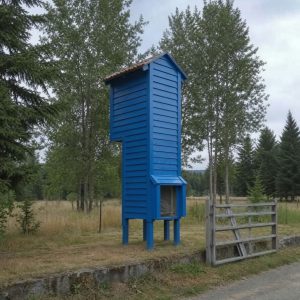
Through branches and damp earth, we came to a decaying structure I had never noticed before. Inside, seated on a broken chair beneath a fractured roof, was a man thin and graying, eyes wary.
He looked like my husband.
He did not look like himself.
When I whispered his name, he stiffened. His gaze held no recognition — only caution, as if I were a stranger speaking too intimately.